Best winter tyres for Icelandic roads in 2026
A no-nonsense look at studded vs. friction tyres and which sets actually perform on Iceland's mixed winter surfaces.
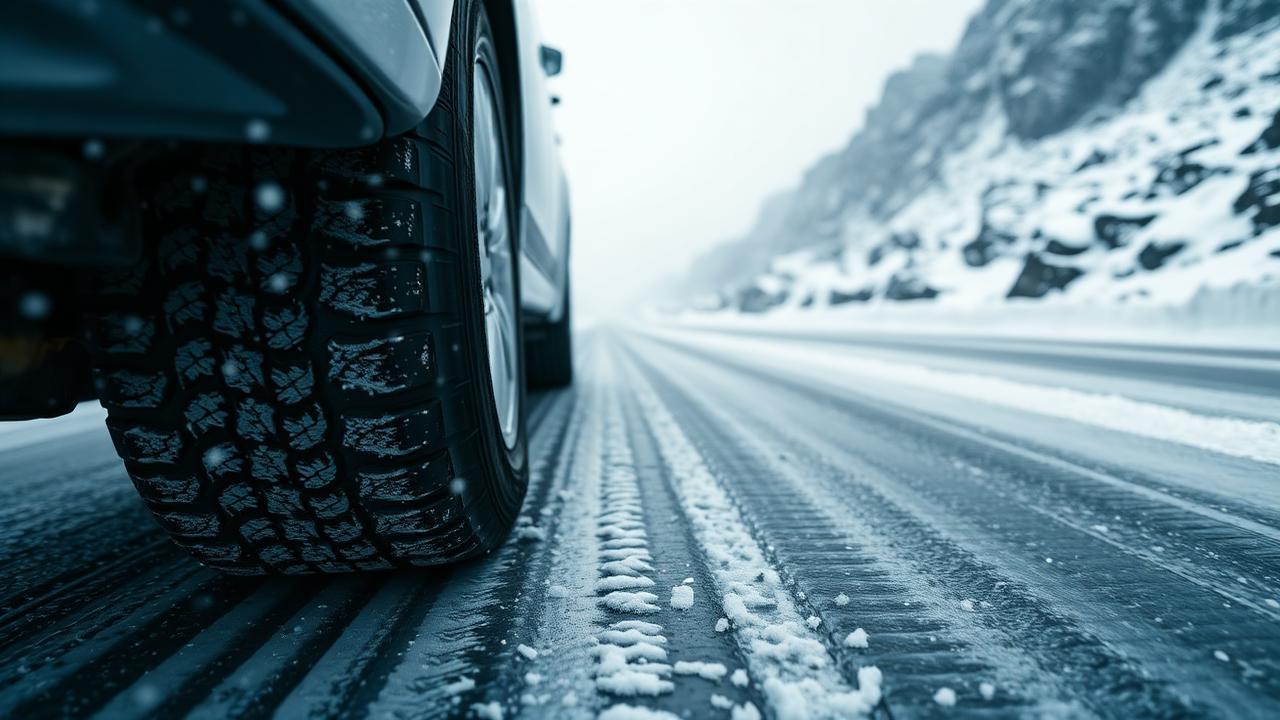
Why this matters more in Iceland
Icelandic winter driving is not just cold — it's wet cold. Surfaces flip from black ice to slush to compacted snow to wet tarmac, sometimes within a single 30-minute drive. A summer or all-season tyre that performs fine in Hamburg or Edinburgh will leave you sliding into a guardrail on Vesturlandsvegur in February.
Studded winter tyres are legal in Iceland from 1 November to 14 April. Most insurers will reduce or void payouts on winter-weather collisions if you weren't on appropriate tyres. This is not a corner to cut.
Our top picks for 2026
Studded, best overall
Nokian Hakkapeliitta 10 — still the benchmark. Best ice braking and the lowest noise of any studded tyre we tested. Expect to pay 38–45k ISK per tyre in 17–19 inch sizes. They wear well — easily 50,000 km if rotated.
Studded, value pick
Continental IceContact 3 — about 20% cheaper than the Nokian and only marginally behind on ice. Better wet performance than you'd expect from a studded tyre. The smart choice if you do mostly Reykjavík driving with occasional Ring Road trips.
Non-studded (Nordic friction)
Michelin X-Ice Snow 2 — for buyers who don't want stud noise on cleared roads. Excellent on snow, very good on ice in temperatures below -5°C, slightly weaker when ice is near freezing.
Budget pick
Hankook Winter i*Pike RS2 — surprisingly capable studded tyre at roughly 25k ISK per. Ice braking is a half-car-length longer than the Nokian, noise is higher, but for a second car or a commuter that mostly stays in town, it's genuine value.
Studded vs non-studded — how to decide
| Use case | Recommendation |
|---|---|
| Daily commute Reykjavík city only | Non-studded (Nordic friction) is fine |
| Regular trips outside Reykjavík in winter | Studded |
| Drive on F-roads or rural East/Westfjords | Studded, every time |
| EV owner concerned about range | Non-studded — studded cost ~3–5% range |
EV-specific notes
EVs are heavier than ICE cars of equivalent size — typically 200–400 kg more, all in the floor. Look for an EV-specific construction (Michelin Cross Climate EV, Nokian Hakka R5 EV) where available.
When to fit and when to swap back
Fit by mid-October if you do any out-of-Reykjavík driving — the first surprise snow usually arrives in the highlands well before 1 November. Swap back to summer/all-season in mid-to-late April. Storing the off-season set indoors, on their rims, in a dry space adds 1–2 years of life.